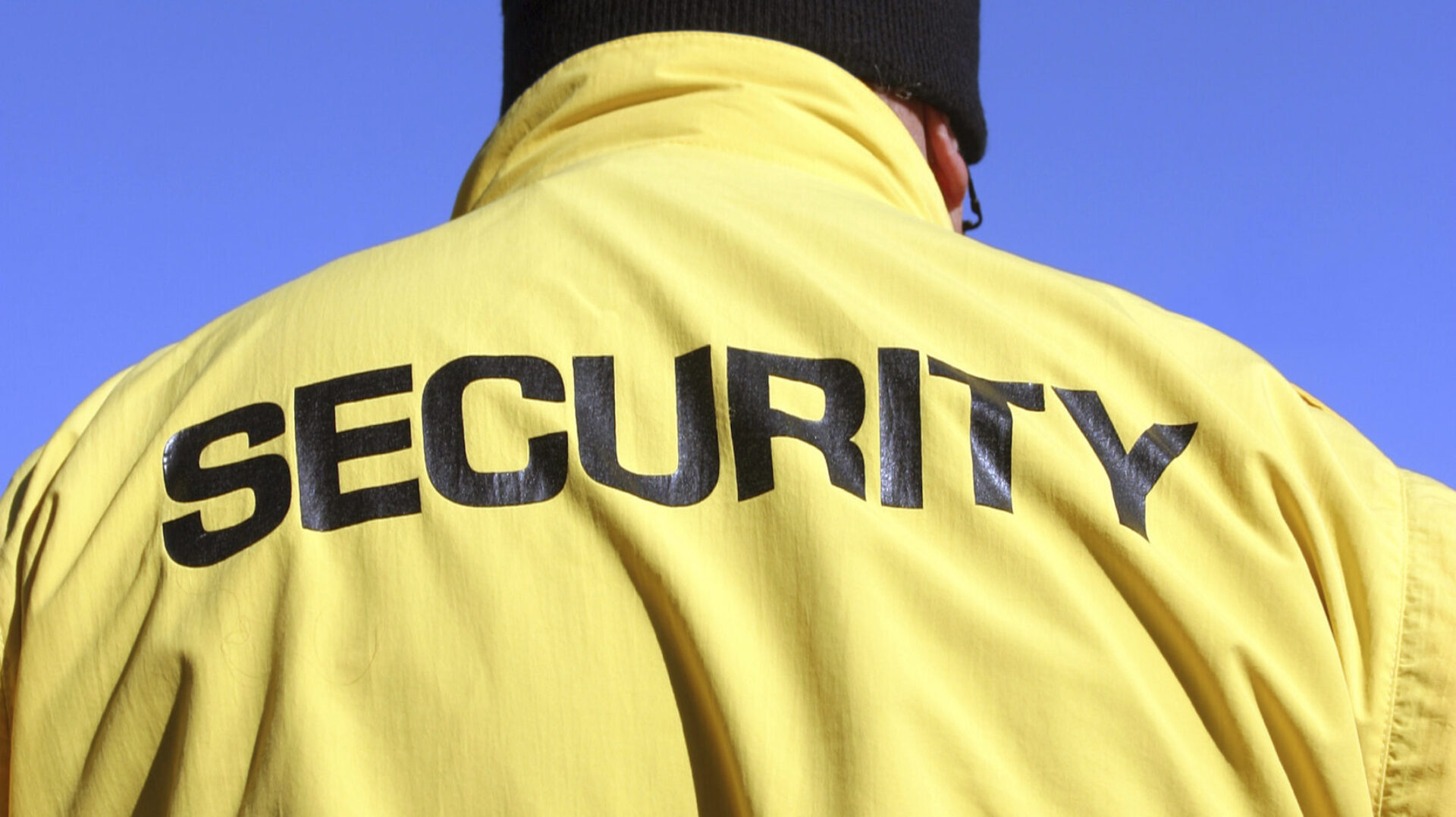
Security Guards Are the Front Line America Keeps Underpaying
At 1:30 a.m. on a Sunday in Rochester, New York, a 31-year-old man was tossed out of a bar on Clifford Avenue for causing trouble. He walked to his car, came back with a handgun, and tried to force his way back inside a crowded room. A security officer stood between him and the door. When the man raised the gun, the officer fired. The man died at the scene. Rochester police called it justified and said the guard “probably saved lives.” No charges were filed.
Read that again: a security guard, likely earning close to minimum wage, made a split-second, life-or-death decision that a room full of off-duty patrol officers wasn’t there to make — because they never are. Police response times in mid-sized American cities routinely run into the double digits of minutes on a good night, longer on a Saturday when every unit in the city is stretched between fights, crashes, and overdoses. In that gap, the person standing at the door is the actual first line of defence. Not a metaphor. Not marketing copy for a security company’s website. The literal first line.
This is not an isolated story. It is a pattern, and it has been playing out for months.
A Spring and Summer of Guards on the Line
In late April, at Fairview Mall in Toronto, a security guard confronted a man fleeing a jewelry store robbery. The suspect shot him in the midsection. He survived, but only after being rushed to hospital in life-threatening condition — hurt doing exactly what his post order required: intervene when something is going wrong in the space he’s paid to protect.
That same week, four students and a security guard were injured in a stabbing at Foss High School in Tacoma, Washington, when a fight broke out on campus. The guard was one of the people who stepped into the middle of it, alongside staff, to keep it from getting worse.
In May, a security guard at a nightclub in Orange County, Florida, returned fire during a shooting and helped stop it from escalating further. That same week in Fort Worth, Texas, three separate security officers were shot on the job within seven days. One of them, 38-year-old Dominique Coleman, didn’t survive. He had crossed the street from the nightclub where he was working to confront a group of customers who were causing trouble, and was shot multiple times, including in the back of the head. Three shootings, one city, seven days — and one guard who went home to his family in a casket instead of a car.
Guards have been stabbed trying to escort a discharged, agitated patient out of a New Orleans medical facility. Guards have been assaulted — stabbed with a metal object, pepper-sprayed, punched, and kicked — while working the door at an urgent care in the Bronx. None of these people carry a badge with arrest powers or the backing of a police union. Most of them carry a radio, a flashlight, and in some jurisdictions, a legally licensed firearm they had to pay out of pocket to train and qualify for.
The Job Changed. The Pay and the Legislation Didn’t.
Security guards are not night watchmen anymore, if they ever really were. They are the de facto emergency response for bars, schools, hospitals, malls, and event venues in a country where police departments are chronically understaffed and stretched thinner every year. They de-escalate mental health crises. They restrain armed and violent people. They make the call — often alone, often in the dark, often for close to minimum wage — that determines whether a bad night stays a bad night or becomes a tragedy.
And what do they get for it? In most jurisdictions in the U.S. and Canada, licensing requirements are minimal, training hours are sparse, and pay sits at or just above minimum wage, often with no health benefits, no retirement contributions, and no hazard pay for a job that is, by definition, hazardous. The public image hasn’t caught up either — guards are still too often dismissed as “rent-a-cops,” a punchline instead of the professionals standing at the door when things go wrong.
I’ve spent 35 years in this industry, negotiating contracts for one of Canada’s largest security guard unions and co-founding Security Guards Only to give these professionals a place to connect and be taken seriously. I wrote recently about the new rules of security workforce recruitment, and the throughline is the same one this Rochester story makes painfully clear: organizations that want to keep good people in this line of work have to lead with real wages, real health benefits, retirement contributions, hazard pay where it’s earned, and funded pathways to certifications like PSP or CPP instead of treating training as an afterthought. That article was written for security executives trying to solve a staffing crisis. This one is written for lawmakers and the public because the argument is the same, just aimed higher up the chain.
If a private security officer is expected to do what police officers used to do more of — stand in the gap, make the split-second call, absorb the risk — then the training standards and the compensation floor need to reflect that reality. That means legislated minimum training hours that actually prepare someone for the job they’re doing, not a weekend course and a laminated card. It means wage floors that reflect the responsibility, not the label “unskilled labour.” It means benefits, because a guard who gets hurt protecting a bar full of strangers shouldn’t be worrying about a medical bill on top of it. And it means police services and municipalities treating security guards as partners in public safety rather than a private afterthought, since in practice, guards are often the ones absorbing the first moments of a crisis before police ever arrive.
Where Is the Monument?
Police officers who die or are injured in the line of duty are, rightly, honoured — memorials, benefits, public recognition, a moment of silence at city council. Security guards who do the same job, in the same doorway, at the same hour, mostly get a headline for a day and then silence. There is no wall with their names on it. No national monument. No line item in most municipal budgets that says “we owe these people more.”
The guard in Rochester likely saved lives on Sunday morning. So did the guard in Orange County. The ones in Toronto, Tacoma, and the Bronx got hurt doing the same job, and Dominique Coleman in Fort Worth paid for it with his life — none of them any less deserving of recognition, whether or not their names ever made the papers outside their own city. They deserve more than a “thank you for your service” tone in the next news cycle. They deserve wages that reflect the risk, training that prepares them for it, and legislators willing to admit that the line between “public safety” and “private security” has been blurring for years — and that the people on that blurred line have earned a seat at the table.
Jeff Ketelaars is a security industry veteran of 35 years and co-founder of Security Guards Only.